
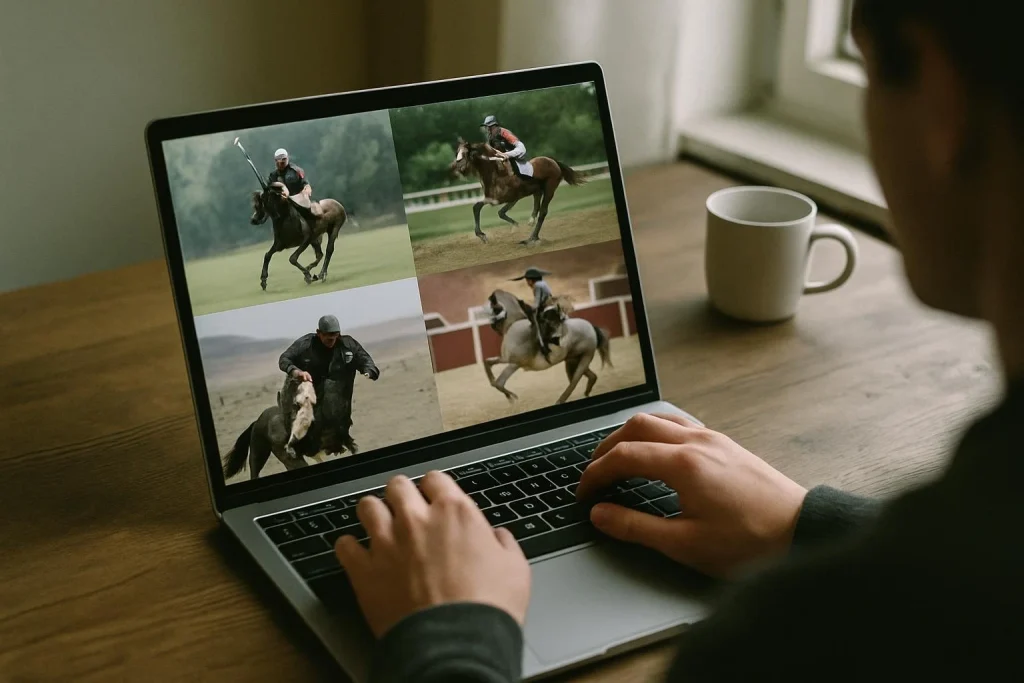
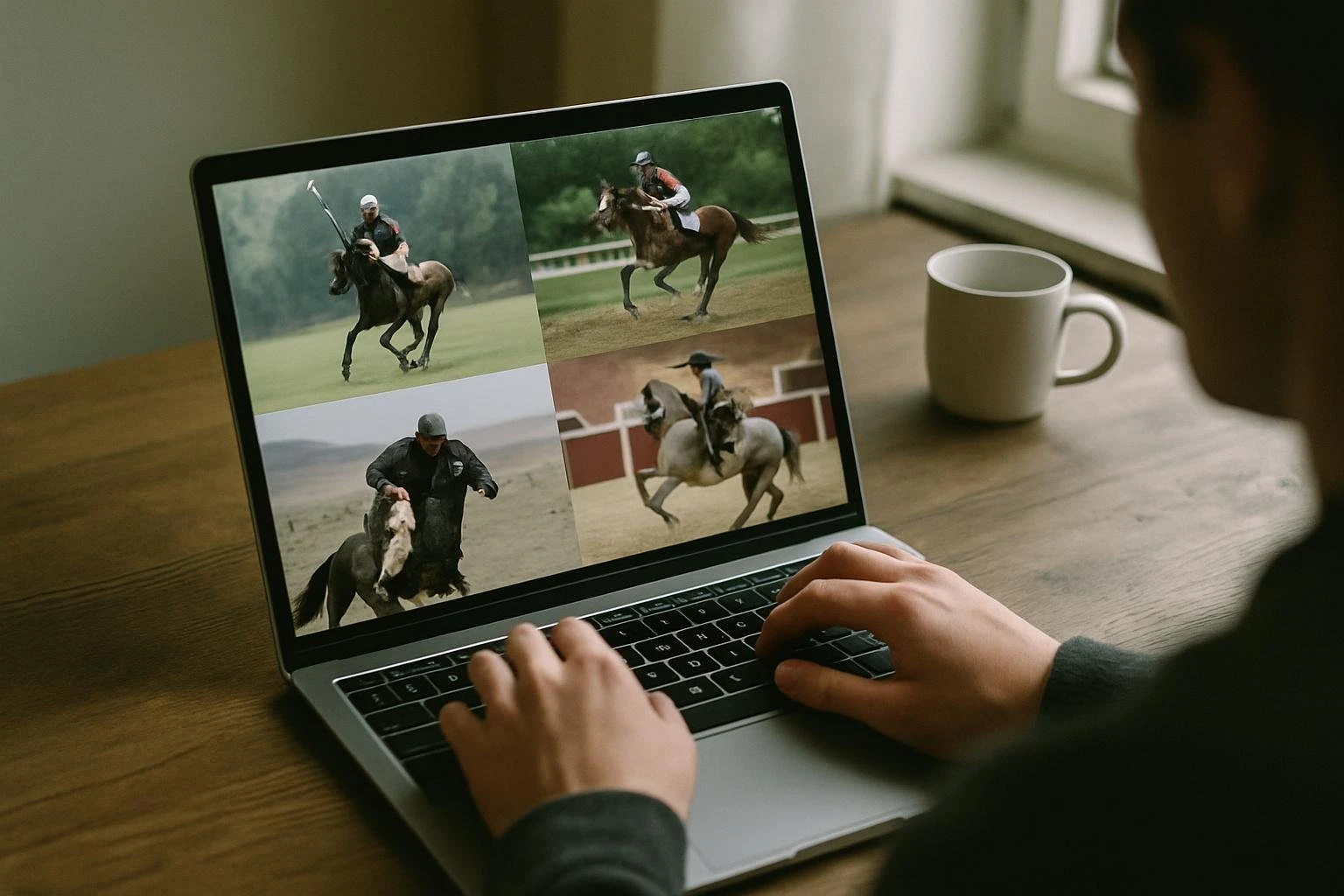
You’re probably wondering: how do horse sports games in different cultures actually tell us something about the people who play them? Here’s my straight answer. Every mounted game, from a fast Mongolian horse race to a chaotic game of buzkashi, grew out of what a community needed, feared, or celebrated. The horse was survival first, then it became sport. Once you see the connection between the two, these traditional horseback games stop feeling random and start making a lot of sense.
Table of Contents
- Quick answer
- Where these games actually came from
- Buzkashi, kok boru, and the games of Central Asia
- Mongolia, mounted archery, and racing across the steppe
- South Asia: tent pegging, polo, and Pakistan’s horseback traditions
- Europe, gymkhana, and how these games traveled
- Key Takeaways
- Conclusion
- What’s next
- FAQ
Quick answer
Horse sports around the world reflect culture because they turned everyday skills (herding, hunting, warfare, travel) into games. Central Asia gave us buzkashi and kok boru. Persia gave us polo. Medieval Europe gave us jousting. Each one is a snapshot of history you can watch in real time.
Where these games actually came from
Let me back up a second. Horses weren’t domesticated so people could have fun. They were domesticated for work, for war, and for moving across land that walking couldn’t cover fast enough. The games came later, and they came from those exact jobs.
Think about it this way. A herder who spends all day controlling animals from horseback is going to get competitive with the herder next to him. That’s how a lot of mounted games were born. Skill first, showing off second.
Persia is usually credited as the birthplace of polo, and its origins go back over two thousand years. It started as training for cavalry, not as a country-club afternoon. The riders were practicing the same moves they’d need in a fight.
Central Asia took a rougher road. The steppe cultures built games around endurance and strength because the land demanded both. That’s the honest truth of equestrian sports history: comfort was never the point. Survival was.
What I find fascinating is how the cultural significance of horse sports stuck around long after the original need faded. Nobody needs a warhorse anymore. But the games kept going, because they became part of who these communities are.
Buzkashi, kok boru, and the games of Central Asia
If you’ve never seen buzkashi in Central Asia, watch a clip. It’ll change how you think about “sports.” Riders compete to grab a goat carcass and carry it to a goal while dozens of other horsemen try to rip it away. It sounds wild, and it is. But it’s also deeply respected across Afghanistan and the region.
The kok boru game is the close cousin you’ll find in Kyrgyzstan and Kazakhstan. Same basic idea, different rules and different name. In parts of Central Asia this game is treated as a national treasure, with organized tournaments and teams. It’s not a backyard thing. It’s serious cultural pride.
Here’s my honest opinion. A lot of Western coverage treats these games as strange or shocking, and I think that misses the point completely. To the people who play them, buzkashi is discipline, courage, and horsemanship at the highest level. The horses are astonishingly well trained. The riders spend years learning.
Now, this is a good spot to answer a few questions I get asked constantly.
What horse games are played in different countries? Buzkashi and kok boru in Central Asia, polo across Argentina, India, and the UK, tent pegging in South Asia and the Middle East, jousting historically in Europe, and long-distance horse racing in Mongolia. Each country has its own flavor.
What is the oldest horse sport in the world? Polo is often called the oldest organized team sport played on horseback, with roots in ancient Persia over 2,000 years ago. Mounted archery and horse racing are arguably just as ancient, though harder to date precisely.
Which cultures use horses in their traditional games? Central Asian, Persian, Mongolian, South Asian (including Pakistan and India), Arab, and medieval European cultures all built games around horses. Nearly every horse-owning society developed some form of mounted competition.
Mongolia, mounted archery, and racing across the steppe
Mongolian horse racing deserves its own paragraph because it doesn’t work like racing you might picture. These aren’t short sprints around a track. They’re endurance races across open country, sometimes fifteen to twenty miles, and the jockeys are often children because they’re lighter on the horse.
The Naadam festival is the big one. Racing, wrestling, and archery together, and the horses are the stars. Winning horses are celebrated with songs. I love that detail. The animal gets honored, not just the rider.
Mounted archery is the other Mongolian tradition worth knowing. Genghis Khan’s armies were built on it. Riders shot arrows accurately at full gallop, controlling the horse with their legs and body alone. Today it survives as a demonstration sport and a point of heritage, and it’s spreading to enthusiasts far outside Mongolia.
These games say something about the culture that made them. Vast land, harsh weather, a life lived on horseback. The sports mirror all of it.
South Asia: tent pegging, polo, and Pakistan’s horseback traditions
South Asia has one of the richest horse cultures anywhere, and Pakistan sits right in the middle of it. Tent pegging is the standout here. A rider gallops at full speed and uses a lance or sword to spear a small wooden peg driven into the ground. It’s precise, fast, and genuinely thrilling to watch in person.
Pakistan takes tent pegging seriously. It’s an organized competitive sport there with real prestige, and the country has produced strong teams. The tradition traces back to cavalry practice, the same story we keep seeing, where a battlefield skill became a peacetime game.
Polo has deep roots across the region too. Northern Pakistan hosts high-altitude polo matches that are famous for their raw, less formal style compared to the polished version you’d see elsewhere. Same sport, very different feel.
I’d say South Asia proves the point of this whole article better than anywhere. The games are living history, still played, still loved.
Europe, gymkhana, and how these games traveled
Europe’s most iconic contribution is jousting, the medieval sport where armored knights charged each other with lances. It was tournament entertainment and combat training rolled together. Jousting faded when armor and cavalry stopped mattering militarily, but it lives on today at festivals and reenactments, and honestly, it draws big crowds.
Then there’s gymkhana. This one’s interesting because it’s a blend. Gymkhana mounted games mix speed, agility, and fun games on horseback, and the word itself came from South Asia into British usage during the colonial era. So you’ve got a sport that literally carries its cross-cultural history in its name.
That’s the thread I want you to walk away with. These games traveled. Polo moved from Persia to India to Britain to Argentina, picking up changes at every stop. Ideas crossed borders on horseback, quite literally, and the sports we watch now are the mixed result of centuries of that movement.
Horse racing cultures spread the same way. From the Mongolian steppe to English tracks to American fairgrounds, the basic thrill stayed constant while the rules and settings shifted to fit each place.
My take after years of studying this: horse sports are one of the clearest windows into a culture you’ll find. You learn a people’s history, values, and geography just by watching how they ride and what they compete for. That’s why I never get tired of the subject.
Key Takeaways
Horse games grew out of real work: herding, war, and travel. Central Asia gave us buzkashi and the kok boru game. Persia gave us polo. Mongolia gave us endurance racing and mounted archery. South Asia and Pakistan kept tent pegging and mountain polo alive. Europe gave us jousting and, indirectly, gymkhana. Every single one reflects the culture that made it.
Conclusion
You came here worried about getting the facts wrong or missing something interesting. I get that. The good news is you now have an accurate map of traditional horseback games across cultures, and you can talk about them without embarrassing yourself at dinner. That was the whole goal.
What’s next
Here’s the single most useful thing you can do today. Grab our free ebook over at https://www.abc.com. It goes deeper into these traditions with more history and context than I could fit here, and it’s a genuinely fun read if this topic hooked you the way it hooked me.
FAQ
What are the different horse sports and games played in cultures around the world?
Common ones include polo (Persia, India, Argentina, Pakistan), buzkashi and kok boru in Central Asia, Mongolian endurance racing and mounted archery, tent pegging in South Asia and the Middle East, and jousting from medieval Europe.
What horse games are played in different countries?
Buzkashi and kok boru in Central Asia, polo across India and Argentina, tent pegging in Pakistan and India, long-distance racing in Mongolia, and historical jousting in Europe. Each country adapted the games to its own landscape and heritage.
Which cultures use horses in their traditional games?
Central Asian, Persian, Mongolian, South Asian including Pakistan, Arab, and medieval European cultures all built games around horses. Nearly every society that depended on horses eventually turned that daily skill into competitive sport.