
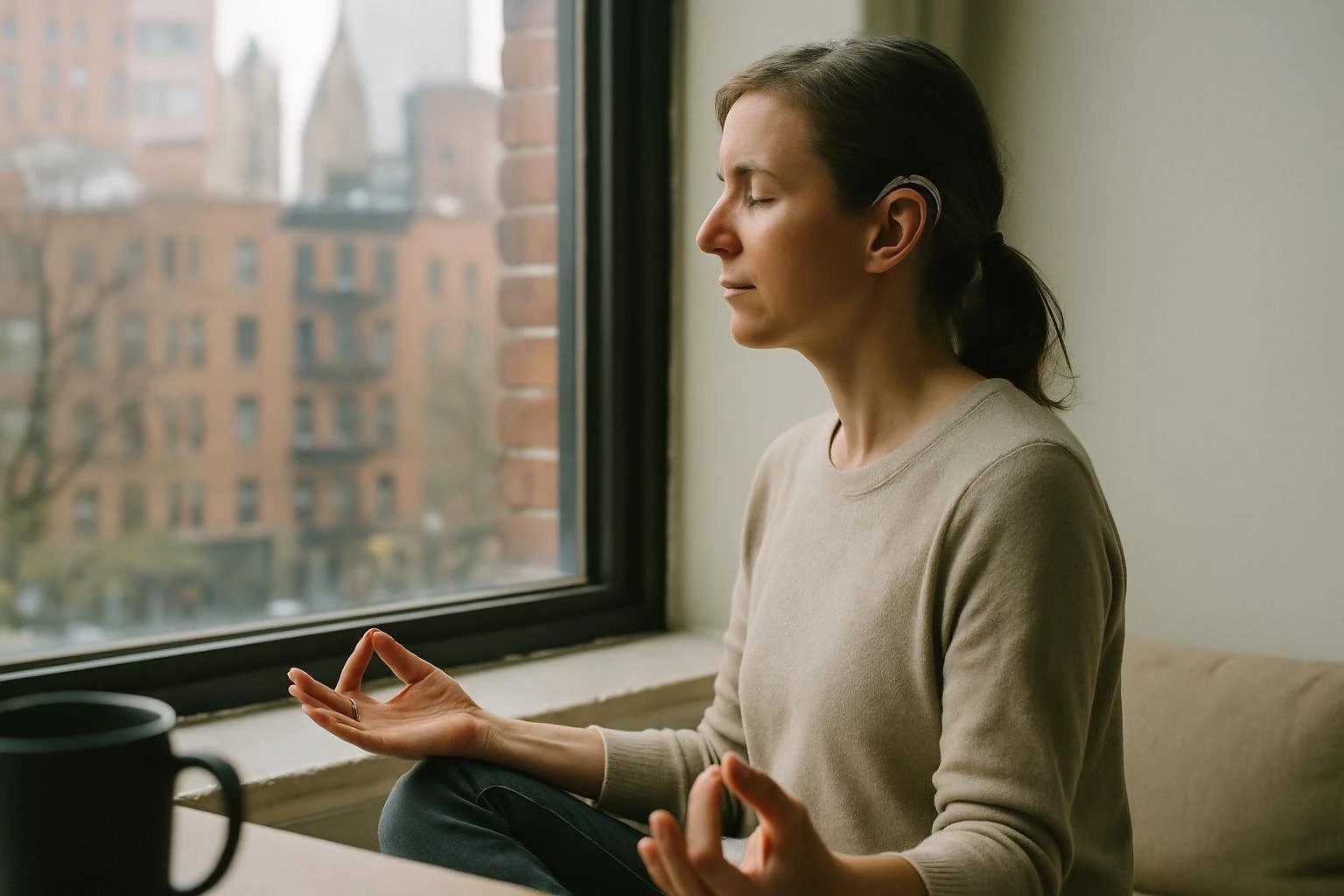
Hearing Loss Mindfulness
Last winter I sat across from my brother at a loud diner and nodded at everything he said, understanding maybe half of it. On the walk home I felt this quiet panic rise up, the fear that the gap between us was only going to grow.
That night is when I started taking hearing loss mindfulness seriously. Not as some magic answer, but as a way to sit with the ringing in my ears and the stress without letting it swallow the whole evening. If you’ve ever felt that same knot of anxiety after a hard conversation, this is for you.
Table of Contents
- Quick answer
- Why the stress hits harder than the hearing itself
- What mindful listening actually looks like
- Sitting with the ringing, and the harder feelings
- Key takeaways
- Conclusion
- What’s next
Quick answer
Mindfulness won’t fix your hearing. But it can lower the stress, the listening fatigue, and the constant bracing for the next thing you’ll miss. Meditation for hearing loss works on your relationship to the sound (and the silence), not the ears themselves. That distinction matters more than I expected.
Why the stress hits harder than the hearing itself
Here’s what I learned the hard way. The hearing loss is one problem. The anxiety wrapped around it is a second, separate problem, and honestly it’s often the bigger one.
When I strain to hear, my shoulders climb up toward my ears. My jaw tightens. By the end of a dinner party I’m exhausted in a way that has nothing to do with my ears and everything to do with the effort. That’s listening fatigue, and it feeds right into the anxiety cycle. The more tense I get, the harder listening becomes, which makes me more tense.
Coping with hearing loss anxiety starts with noticing that loop before it runs away with you. I won’t pretend I catch it every time. Some days the frustration wins. But mindfulness gave me a pause button I didn’t have before, a moment between “I missed that” and the spiral of “I’m going to end up alone.” That pause is small. It’s also everything.
What mindful listening actually looks like
People hear “meditation” and picture an hour of stillness. That’s not what helped me.
Mindful listening exercises are short and practical. I’ll sit for two minutes and just name the sounds around me without judging them. The hum of the fridge. A car outside. Even the ringing in my ears, which I used to fight and now try to simply observe. Strange thing is, when I stop wrestling the tinnitus, it loosens its grip a little. Breathing exercises for tinnitus do the same trick: slow inhale, longer exhale, letting the sound just be there instead of being an emergency.
Sitting with the ringing, and the harder feelings
The tinnitus is the part people ask me about most, so let me be honest about it. Some nights the ringing in my ears is loud enough that I notice my heart rate climb. That connection between hearing loss and mental health is real, and I think we don’t talk about it enough. The frustration can slide into something heavier, and coping with the low moods matters as much as coping with the sound.
Relaxation techniques for ringing ears aren’t a switch that turns the noise off. What they do is change how much of my attention the noise gets to steal.
Can mindfulness reduce tinnitus ringing? Not the volume, in my experience. But mindfulness for tinnitus relief works by shifting your focus away from the sound and calming the stress response that makes it feel louder. Many people report the ringing bothers them noticeably less, even when the tone itself hasn’t changed at all.
How do I cope with the stress of hearing loss? Start small and specific. A few minutes of breathing before a conversation you’re dreading. Naming the feeling (“I’m frustrated”) instead of acting on it. Accepting hearing loss doesn’t mean giving up. It means stopping the exhausting fight against reality so you have energy for the people you love.
Does meditation help with hearing loss anxiety? Yes, and there’s real reason behind it. Meditation for hearing loss trains your nervous system to settle instead of staying on high alert. Over time that lowers the baseline anxiety, so a missed word feels like a moment, not a catastrophe.
Key takeaways
The hearing loss and the stress around it are two different things, and you can work on the second one starting today. Mindfulness won’t quiet your ears, but it can quiet the panic. Short mindful listening exercises beat long, intimidating meditation sessions. And accepting hearing loss frees up the energy you’ve been spending fighting it.
Conclusion
I still miss words at loud dinners. That hasn’t changed. What changed is that I no longer walk home convinced I’m losing the people I care about. Living with hearing loss got lighter when I stopped bracing against every sound and started, slowly, making peace with it. That peace is a practice, not a destination, and some days I’m better at it than others.
What’s next
Try this tonight. Two minutes, eyes closed, just naming the sounds around you without judging a single one. See how your shoulders feel afterward.
And if this hit close to home, reach out and tell me about your own noisy diner moment. I’d genuinely like to hear it. So here’s the question worth sitting with: what would change for you if the anxiety got quieter, even while the ringing stayed the same?