
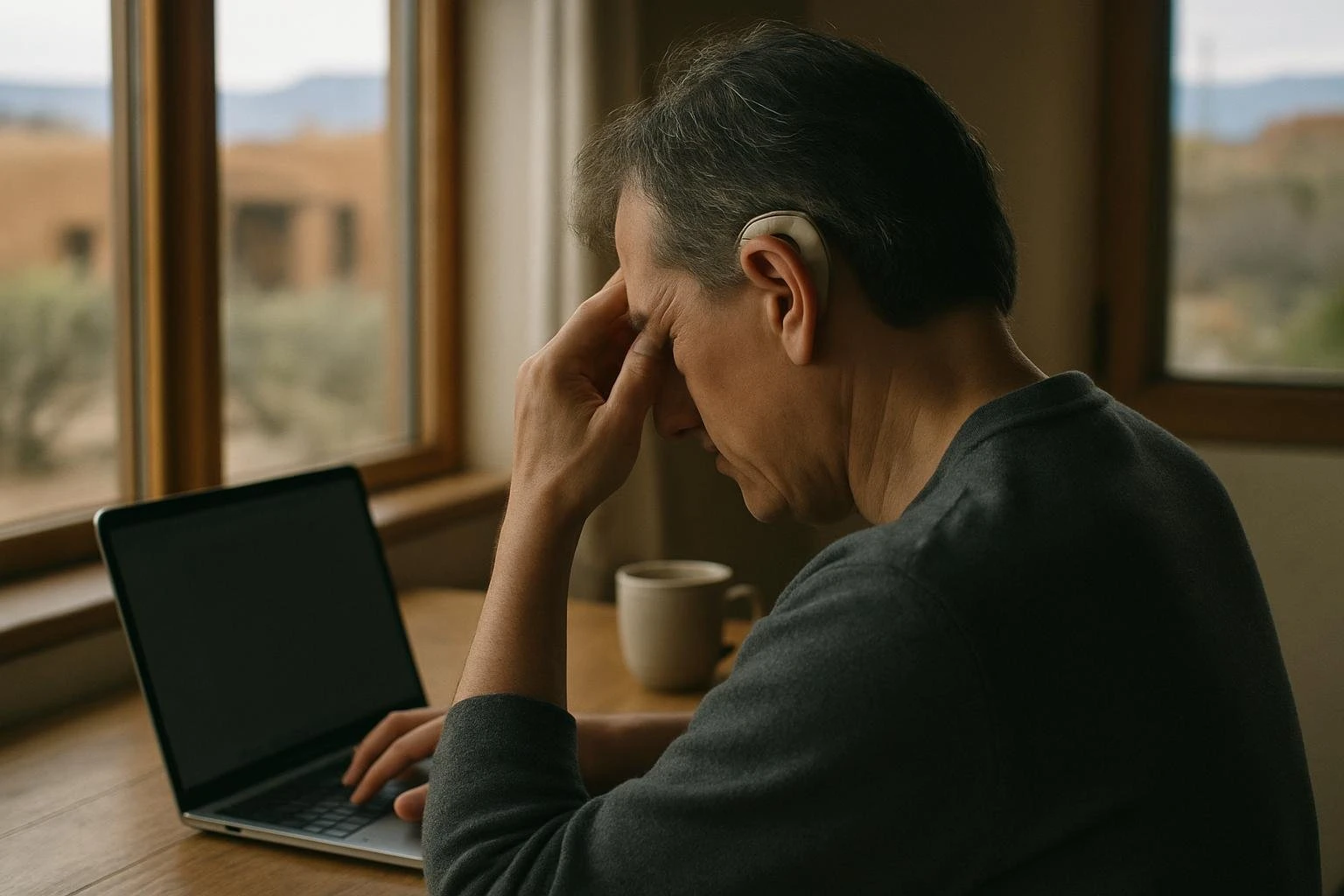
Hearing Loss Listening Fatigue
Here’s something most people get wrong: they think being wiped out after a day of talking means your hearing is getting worse. It usually doesn’t. Hearing loss listening fatigue is your brain working overtime, not a sign your ears are failing on you.
I want to say that clearly because I’ve watched people scare themselves half to death over it.
You’re tired after listening all day because your brain is doing a job your ears used to handle for free. Straining to hear wears you out the same way squinting all day gives you a headache. The exhaustion is real. The “something is broken in me” story you’ve attached to it is often not.
Table of Contents
- Quick answer
- Why you’re so worn out after a normal day
- The part nobody warns you about
- What actually helps (from what I’ve seen)
- When it’s worth getting checked
- Key takeaways
- FAQ
- What’s next
Quick answer
If you’re drained after conversations, work calls, and social events, that’s listening fatigue. Your brain is filling in the sounds your ears miss, and that effort adds up fast. It’s common. It’s fixable. And it rarely means your hearing suddenly got worse overnight.
Why you’re so worn out after a normal day
Think about what happens in a noisy room. Someone’s talking, a fridge is humming, chairs scrape, three other conversations bounce around. A person with typical hearing tunes most of that out without trying. When you have some hearing loss, your brain can’t filter as cleanly, so it grabs every scrap of sound and tries to guess the words.
That guessing is work. Constant, quiet, invisible work.
By 3pm you feel mentally exhausted, and you haven’t done anything that looks tiring on paper. That’s the confusing part. You didn’t run a marathon. You just talked to people. But the brain fog and hearing loss combo is real, and it hits hardest when the room is loud or the day is long. Being this drained doesn’t mean you’re weak. It means you spent your energy differently than the people around you did.
The part nobody warns you about
Social events are the sneaky ones. You go to a birthday dinner, you’re happy to be there, and two hours later you feel like you got hit by a truck. Worn out after social events, hearing loss doing its quiet thing under the surface the whole time.
I’ve seen people start turning down invitations because of this. That breaks my heart a little. The problem usually isn’t the socializing. It’s the setting and the setup.
What actually helps (from what I’ve seen)
You have more control here than you think. A few things move the needle, and none of them require you to become a monk or overhaul your life.
- Pick your seat. Back to the wall, good light on the other person’s face. Reading lips helps even when you don’t realize you’re doing it.
- Take real breaks. Step outside for five minutes at a party. Let your brain stop straining. This alone changes how the night ends.
- Cut the background noise where you can. Ask to move to a quieter table. Turn off the TV during dinner conversation.
- Try slow breathing when you feel the overwhelm rising. Calming your nervous system takes the edge off sensory overload, and yes, it genuinely helps.
Now, my honest take on hearing aids and fatigue. They help a lot of people, but they’re not magic on day one. When your ears do more work, your brain does less guessing, and that concentration fatigue eases up. Some folks feel more tired at first while adjusting, then better after a few weeks. So if someone promises instant relief, I’d be a little skeptical. Give it time and get them tuned properly.
And if you’re already this exhausted from trying to hear, please stop blaming yourself for it.
When it’s worth getting checked
Here’s my line. If the tiredness is steady and manageable, small changes go a long way. If it’s getting sharply worse, or you’re pulling away from people you love, get your hearing tested. Not because I think something’s badly wrong. Because knowing removes the fear, and fear is half of what makes this so heavy.
You deserve to get through a normal day without feeling completely burned out.
Key takeaways
- Listening fatigue is brain effort, not proof your hearing is crashing.
- Loud rooms and long days make it worse; seating and breaks make it better.
- Hearing aids often help over time, not always instantly.
- Get tested if things change fast or you start avoiding people.
FAQ
Why does trying to hear all day make me so tired?
Because your brain is doing extra work to fill in sounds your ears miss. That constant guessing and focus drains mental energy fast, so you feel exhausted by afternoon even though the day looked ordinary.
Can hearing loss make you exhausted?
Yes. The effort of straining to hear and following conversations in noise burns real energy. Feeling drained after talking is one of the most common complaints, and it’s a normal response, not a sign you’re failing.
Do hearing aids help with listening fatigue?
Often they do, since your brain works less when your ears hear more. Some people feel more tired during the first weeks of adjusting, then noticeably better. Proper fitting and a little patience make the difference.
What’s next
Try one thing this week. Pick your seat at the next dinner, or take a five-minute break at the next gathering, and notice how you feel afterward. If the tiredness keeps building or the worry won’t quit, reach out and let’s talk it through. You don’t have to figure this out alone.